Up next in 10



#homeless #blackhistory
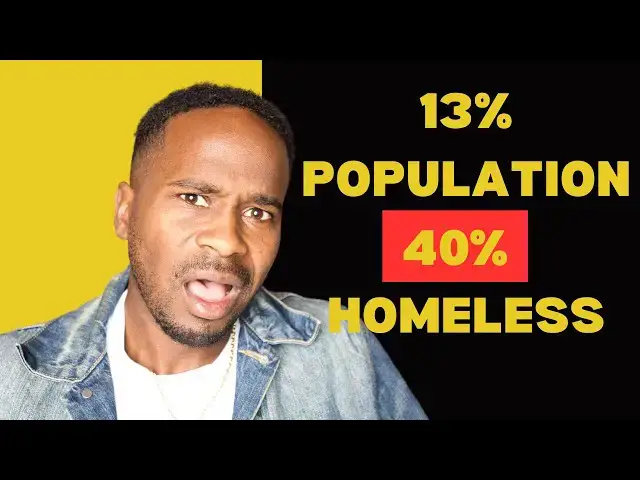
Homelessness in America is a national crisis. For the Black population, it is beyond a crisis.
Gentrification in Inglewood: https://youtu.be/mqlnH3bcUig?si=QQazWofQZh-GyBld
Subscribe to our channel so you don't miss any future videos!
Check out the books we love and recommend in our
Black Excellence Book Club:
https://www.blackexcellence.com/store/
Some links are affiliate links, which means we earn a very tiny commission if you make a purchase.
__________________________________________________________
Sharing interesting and noteworthy stories in Black culture.
All content provided by Black Excellence Media, LLC is for entertainment purposes only. None of the information or advice provided is to replace professional advice.
Show More Show Less View Video Transcript
0:00
Homelessness in America is at a record
0:02
high. Homelessness in the US hit a
0:04
record level this year, jumping by more
0:06
than 18% and rising even higher among
0:09
families specifically. In America today,
0:11
across the country, a low-wage job is
0:14
homelessness waiting to happen. Let me
0:16
give you a mind-blowing figure. Black
0:18
Americans make up just 13% of the US
0:21
population, but almost 40% of the US
0:24
homeless population. I mean, at these
0:25
numbers, it is an understatement to say
0:27
black people are outrageously over
0:29
represented in the homeless population.
0:31
It would be something to be 13% of the
0:34
population and say 20% of the homeless
0:37
population, but I mean 40%. Why this
0:40
insane disparity and which cities have
0:43
the biggest black homeless population?
0:45
That's what we're going to get into
0:46
today. Hi, my name is Jared and I talk
0:48
about interesting stories and trends in
0:50
black culture because black culture is
0:52
just so interesting to me. If you share
0:54
my interest, hit that subscribe button
0:56
and let's deep dive into some
0:57
interesting black culture and history in
0:59
every episode. In 1863, the Emancipation
1:04
Proclamation liberated millions of
1:06
enslaved African-Americans. That act was
1:08
pretty much an event that created mass
1:10
black homelessness. The 40 acres in a
1:13
mule, oh, the 40 acres in a mule, we
1:16
were promised never materialized. Many
1:18
newly freed individuals found themselves
1:20
without shelter, congregating on the
1:23
fringes of Union Army camps and in
1:25
northern cities, seeking refuge and
1:28
opportunities. These makeshift
1:29
settlements were among the earliest
1:31
instances of mass black homelessness in
1:34
the United States. The reconstruction
1:35
era held the promise of integrating
1:38
African-Americans into society as equal
1:41
citizens. Yet, southern states enacted
1:43
black codes, restrictive laws designated
1:46
to limit the freedoms of black
1:48
individuals. These codes curtailed
1:50
economic opportunities and often
1:53
criminalized unemployment, leading to
1:55
increased displacement and homelessness
1:57
amongst African-Americans. Actually,
2:00
black codes were used to put black
2:01
people, specifically black men, into a
2:04
form of slavery, but that's something
2:07
for another video. The great migration,
2:09
the movement of black people from the
2:11
South to the North, Midwest, and West,
2:13
an event we talked about in some of our
2:15
other videos on this channel, meant
2:18
better economic opportunities and also
2:20
different types of discrimination like
2:22
redlinining, which is another topic we
2:24
talked about a lot on this channel. You
2:26
know, that's the practice of
2:27
systematically excluding black families
2:30
from home ownership and access to equal
2:32
housing. So, when all of these things
2:34
add up, it creates a community that's
2:36
economically far behind the general
2:38
population. How far behind, you might
2:40
ask? Go watch our video on why black
2:42
people are 13 times poorer in America.
2:46
Yes, 13 times poorer after you watch
2:48
this video, of course. And I'm going to
2:50
ask you for a quick favor. If you like
2:52
this video and you find it entertaining,
2:54
informative, interesting, anything
2:56
positive, now is the time to hit that
2:58
subscribe button to show us that you
3:00
find our content enjoyable or just me
3:03
enjoyable. We quickly looked at some
3:04
historical factors that have contributed
3:07
to the large homelessness crisis in the
3:09
black community, but what are the
3:11
numbers now? I can't overemphasize the
3:14
role the state of our economy has in the
3:16
general homelessness crisis. Housing has
3:18
become incredibly expensive with many
3:20
rental places requiring that you make
3:22
three or I've even heard in some areas
3:26
five times the rent on top of paying
3:28
double the deposit fee and the first and
3:31
last month's rent. And we all know how
3:33
insane the market has become to buy a
3:35
house. So imagine how easy it is to slip
3:37
into homelessness if you lose your job
3:39
and don't have a strong support system
3:41
that will give you free housing. I mean,
3:43
let's be honest. Most people that we
3:45
know probably are living close to
3:46
paycheck to paycheck, and they
3:48
definitely don't have 3 to 6 months of
3:51
expenses and emergency savings to get
3:53
them by until landing their next job.
3:55
And as you might expect, there are some
3:57
standout cities when it comes to
3:59
homelessness in general, but black
4:01
homelessness specifically. First, let's
4:03
look at some numbers on homelessness in
4:05
America. According to HUD's 2023 annual
4:08
homelessness assessment report, 650,000
4:12
people in America lack permanent
4:13
shelters. That number reflected the most
4:16
number of homeless people since its
4:18
report first published in 2007. And that
4:21
number was also a 12% increase over
4:23
2022. New York, Vermont, and Oregon had
4:26
the highest per capita rates of
4:28
homelessness. I mean, with me living in
4:30
California and seeing homeless people
4:32
everywhere, I definitely thought that
4:34
California would come in the top three,
4:36
but I wasn't that far off because it was
4:40
at the number four spot. There are
4:41
currently
4:44
243,624 black homeless people in
4:46
America. Let's look at some major cities
4:48
with a major homelessness crisis. New
4:51
York's homeless population reached an
4:53
unprecedented level this year with
4:56
approximately
4:58
120,513 individuals sleeping in shelters
5:01
each night. Additionally, thousands more
5:03
were unsheltered or temporarily residing
5:06
with others, bringing the estimated
5:08
total to over 350,000 individuals
5:11
experiencing homelessness in the city.
5:13
Racial disparities are evident within
5:15
this crisis. Among heads of households
5:17
in shelters, approximately 56% are
5:21
black. That's for a city with an overall
5:24
black population of 23%. Over in the
5:27
West Coast, Los Angeles County has a
5:29
homeless population of
5:32
75,312 people, of which 34% are black,
5:36
and the black population in LA is about
5:39
9%. Ridiculous. Chicago's homeless
5:42
estimation was about 18,800 in 2024. Of
5:47
those individuals, 45% were black.
5:50
Chicago is 28% black. Seattle has a
5:53
homeless population of
5:55
16,868 people. 15% of that population is
5:59
black, while only 7% of the county's
6:02
overall population is black. In
6:04
metropolitan Denver,
6:07
14,281 people are experiencing
6:09
homelessness. Black people make up only
6:11
5% of the Denver metro population, but
6:14
15% of the homeless population. And of
6:17
course, the next three spots take us
6:19
back to California. San Diego, San Jose,
6:22
and Oakland areas all have similar
6:25
homelessness numbers, hovering around
6:27
10,000 people. No matter how much I
6:29
look, I could not find any racial data
6:31
for the homeless community in San Diego
6:34
and San Jose. But in Oakland,
6:37
52.5% of the homeless community is
6:39
black. That's in a city that's 24%
6:42
black. And that percentage was actually
6:44
higher in 2022, showcasing 60% of the
6:48
homeless population in Oakland was
6:50
black. San Francisco is another city in
6:53
California with a high percentage of
6:54
black homelessness. There are around
6:56
8,300 homeless individuals in the city
6:59
of San Francisco. Black people make up
7:01
only 6% of San Francisco, but 38% of the
7:05
city's homeless population. And one last
7:08
city, Phoenix, has a homeless population
7:11
of
7:12
9,435 people. Only 6% of the Phoenix
7:15
metro is black, but 29% of the homeless
7:18
population here is black. I mean, we
7:20
have to ask ourselves, what is going to
7:22
solve our homeless problem? I might not
7:24
be a sociologist, but I have a feeling
7:27
three things would help a lot. We need
7:29
to make housing more affordable somehow.
7:31
I don't know how it needs to be done.
7:33
Either build more houses, we need to do
7:35
something. And number two, we need free
7:37
preventative health care. Healthcare
7:38
costs are the number one reason why most
7:41
people go into bankruptcy in America.
7:43
And under the umbrella of health care,
7:46
at number three, we need more and better
7:48
mental health resources. I mean, you
7:50
have to be honest, a lot of people are
7:52
just one to two paychecks away from
7:55
being temporarily homeless. And it's
7:57
sad, but I'll close out this video on
7:59
that depressing note. Thanks for
8:01
watching to the end. And if you want to
8:03
see more on this subject, my partner
8:05
went out and did an awesome documentary
8:07
on gentrification and homelessness in
8:10
California. I'll leave it in a link
8:11
below. and I'll see you in the next
#People & Society
#Discrimination & Identity Relations
#Poverty & Hunger
#Housing & Development