Up next in 10



#travel #blackexcellence
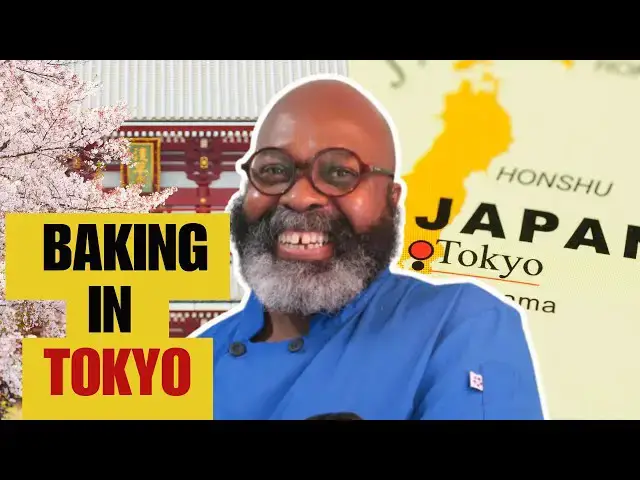
Kyle Sexton moved to Tokyo, Japan over 30 years ago and built a successful bakery that's a must try in the biggest city in the world.
Connect with Kyle:
IG: https://www.instagram.com/kylesgoodfinds
Website: https://kylesgoodfinds.net
"The Other Route" celebrates people living life on the route less traveled, from living abroad to carving a unique lifestyle for themselves right here in the States.
Subscribe to our channel so you don't miss any future videos!
All content provided by Black Excellence Media, LLC is for entertainment purposes only. None of the information or advice provided is to replace professional advice.
Website: https://blackexcellence.com
Show More Show Less View Video Transcript
0:00
People come in here and they say, I'm with the best character in Tokyo
0:03
First thing I can say is, I don't say that kind of stuff. Other people say it. A lot of people in America have these outdated stereotypes
0:09
And I say, yes, I'm a black man in Japan, but it doesn't come up. 40 years ago, my Japanese friends in New York told me that now
0:16
black is a vogue in Japan. This was 40 years ago. I have a bald head, but I see Japanese, I'm dang Japanese in dreadlocks
0:22
Does their hair do that? Okay, I probably sound ignorant saying that. What if the light you've always dreamed of wasn't waiting for you at home
0:28
but halfway across the world. More and more black Americans are reimagining what it means to live
0:34
thrive, and belong. They're opting out of the familiar, and they're choosing the other route
0:40
where success isn't just defined by hustle, but by peace, purpose, and passion. Today's guest
0:46
is the perfect example of that shift. Kyle Sexton is a talented chef and entrepreneur
0:52
who left the United States to start a new chapter in Tokyo, Japan. We're going to be talking about
0:57
food. We're going to be talking about identity. And we're definitely going to be talking about
1:01
the Black community, especially what it means to carve out a space for yourself
1:05
so far away from home. All right. My name is Mike Riley, and this
1:09
is The Other Route. Let's get into it. Well, let's start with your story. Can you tell us a little bit about where you're from originally, and what was your upbringing
1:17
like here in the United States? Well, I'm from New York, Pennsylvania. It's the first big city at the Mason-Dixon line. It's near the
1:25
border of Pennsylvania and Maryland. I didn't know all this when I was growing up, but my people were
1:31
coming from Barenburg, South Carolina, going to New York City. They stopped in York, never made it
1:37
to New York. So that's why my family landed in York. I had 53 first cousins. And when I left home
1:44
I thought all Black people had families that large. I didn't know anything until I met Blacks in Tokyo
1:49
Some people don't know the family at all. We have two reunions every year. That is insane. So there is a black community over there
1:56
Yes, yes, there is. It's much bigger now. In the past, most of the blacks here have been from Nigeria, but there are more and more blacks from all around the world coming here
2:06
I'm going to get into that a little bit more a little bit later because I'd love to pick your brain on that one. That's very interesting
2:12
Now, you said you're from York, Pennsylvania, and you were able to kind of trace that that that lineage all the way back to, you say, when your family came here and they were across the Mason-Dixon line and all that kind of stuff
2:22
That's pretty that's pretty interesting. What's that like having that that transition
2:26
Because I understand that that history for black people isn't necessarily there in Japan
2:32
No, it isn't. But I mean, I left Pennsylvania. Yeah. I graduated high school in 76, and I left Europe in 1977
2:41
Went to school in Providence, School of Photography for one year, and then I moved to New York in theory to become a fashion photographer
2:49
But I never pursued it at all because soon after moving there
2:54
I became obsessed with Japanese culture. So I was only interested in moving to Japan
3:00
My only job in America has been a photo finisher. I used to process film, which I did in three different states
3:06
That's all I knew. Photo finisher, processing film. What got you into the culinary arts
3:11
How did you dip into that world? How did you become this world-renowned chef or baker
3:18
I don't know if there's a technical term for being a baker. I mean, I know you're known for your carrot cake
3:22
We'll get into that in a minute, too. But what got you into the culinary world? Just by happenstance
3:27
I mean, I always wanted to be a restaurante from when I was young. but I never thought about opening a bakery here
3:34
When I say about my obsession, I moved here, I was 27 years old
3:39
and I moved here with just $300. That's all I had. That was my first time applying
3:44
and I had no idea what I was going to do in Japan at all
3:48
My obsession in New York City, my circle of friends, they were Japanese
3:52
So it's not like I dropped in Tokyo and didn't know anybody. Their friends here became my friends
3:58
But still, I didn't know what I was going to do for work or anything. I was never worried about that
4:04
I was just happy to live here. But then the money ran out very, very quickly
4:09
So I had to borrow some money from my father. We didn't know that I left America
4:14
It was only $300. He didn't know. So you just kind of got up and just left with no plan, no nothing
4:21
You fell in love with Japanese culture that much when you were in New York that you just said, I'm going to Japan and I might not come back
4:27
Everybody knew how I was living. They just assumed I had money
4:31
That's all. Oh, I see. I see. I see. I had a session of like six years in Manhattan
4:37
Although Manhattan is a very tough city At different times I worked two full jobs but I just had money So you had the New York swag down where you made everybody seem like you had money Like you know you had that whole thing going on
4:49
Yeah, yeah. New York people are good for that. Are you a fan of the Knicks by any chance
4:54
Anyway, yeah, they took a loss today. But anyway. Well, this year I was following the Clippers
5:01
Oh, the Clippers. Oh, yeah, yeah, yeah, yeah. I'm a Lakers fan personally. So, yeah, we have our feelings about that here in L.A
5:07
So you now run a bakery in Tokyo called Kyle's Good Finds, which is definitely a vibe, by the way
5:15
What inspired you to take that leap and build a life and business in Japan of all places
5:21
Nothing conscious. None at all. I was baking a carrot cake, taking it to friends' apartments for parties
5:27
Not silly at all. Independently, three Japanese friends out of the blue offered me $10,000 each to open a bakery
5:35
A fourth friend actually found the bakery for me. So I tell people, they sort of push me into it
5:41
I'm not thinking of opening a bakery at all. I tell people I'm not a trained chef
5:46
The Japanese press is always amazed when I say, I taught myself how to make these cakes by from books in Japan
5:53
I didn't go to school at all. What? Really? So this just all kind of just came from happenstance
5:58
You started making carrot. What made you start wanting to make, why carrot cake
6:02
These recipes I just picked out of the blue. There's nothing, no reason
6:06
Oh, man. So, okay. So leaving the United States, that's a big decision
6:11
That's a decision that a lot of people may not even be all that comfortable with
6:16
Let me ask you, especially to start a business kind of abroad, what were some of the biggest cultural adjustments that you had to make in Japan, both professionally and personally
6:25
Yeah, this is what many interviewers ask me. And I explained to them that my obsession while living in New York City was like six or seven years
6:33
So there were no surprises coming in. Oh, right. At all. And then some people ask me, what were your difficulties or pitfalls
6:42
And I say, I haven't seen any yet. And so I don't know why people are amazed at that
6:48
Somebody asked me a podcast, what were my failures in business? And I said, I haven't had any failures
6:54
And then later, I'm thinking, maybe her idea of a failure is different from mine
6:59
but I don't really see any failures. What you read about food business in Japan, I guess, or in general
7:06
is that you won't know whether you're going to be able to survive after three years or whether you're going to be able to make a go of it
7:12
because food businesses go bankrupt all the time. But I've been making money from day one
7:17
and there was never any plateau for anything. But I'm a small business, though, and I don't mind being small
7:26
although I'm trying to hand the business over to my young son now. But I don't really equate the business guy with how large you are
7:36
I'm satisfied being small. When my son takes it over, if he has ideas about making it bigger, sure, I'll try and help him
7:43
Yeah, absolutely. Absolutely. Maybe that's a bit of a difference in the way the culture is out in Japan
7:50
I know when I traveled abroad, I noticed that people were, as far as capitalism and making it the biggest thing ever
7:56
that didn't seem like that was the main goal. But to have something that people enjoy and you can still make money off of seemed to be something that a lot of people were satisfied with
8:05
But as a black American in Tokyo, like how would you describe your experience navigating identity and culture out there
8:13
I mean, do you do you do you feel seen? Do you feel welcomed or did you or is it something else
8:18
Like you said, there's a black community out there. So I would imagine that people are pretty attest to it
8:22
I feel seen and welcomed. But I mean, when I came here 40 years ago, when I would meet Black Americans on the streets and I would gravitate towards them, and then I would try and get in that group. I was in an organization 40 years ago called JAPA, Japan African American Friendship Association
8:40
I've been secretary, treasurer, vice president, and president. But it's disbanded. We're trying to revive it now, but that was how I got to see Black Americans 40 years ago
8:53
But now I see them on the street. There's many, many more. Interesting. So it's like, is it common to see a Black person, a Black American, African American every day out there in Tokyo
9:02
In Tokyo, yes. Some of the Black tourists come here because I've been written up and they come to my shop
9:09
they say as soon as they land on Japanese soil they feel a sense of relief and peace and I tell
9:15
them I thought only as longtime black residents could feel that I didn't know a tourist could
9:19
feel the difference that is pretty I now now I dying to go now I gotta go I always been kind of interested in Japanese culture myself but you know I get from what I see on TV and the Internet and stuff like that So I would never know that there was a black community in Tokyo
9:35
Let me ask you this. In your experience, how are African-Americans generally perceived in Japan
9:42
Is there curiosity? Is there misunderstanding? I mean, is there did they kind of associate us with the Americans in general
9:49
What's the kind of perception for the black community there or for black people, I should say
9:53
As far as I see, it's probably the same perception worldwide. I mean, Japanese have always been interested in Black sports and Black music
10:03
And so they've always been interested in that. The NBA is big here
10:08
Black music is big here. Black culture is big here. So they embrace that, the younger people especially
10:14
I have a bald head, but I see young Japanese in dreadlocks. Really
10:20
Does their hair do that? Okay, I probably sound ignorant saying that, but..
10:25
That's a true, but they're getting true. Oh, okay. Okay. That's pretty interesting
10:31
That's pretty cool. So there's a welcoming for African Americans there in Japan
10:37
Yes, I mean, 20 years ago, while living in New York City and making my get ready to move here
10:45
my Japanese friends in New York told me that now, like, is a vogue in Japan
10:50
This was 40 years ago. Oh, yeah, yeah. So 40 years. So I would imagine you speak the language at this point
10:56
Not as well as my wife and children, Jared. My wife and daughter, they say they're embarrassed when they see me on Japanese TV
11:05
I'm not bad Japanese. But I'm primarily in the shop by myself serving Japanese customers
11:11
Absolutely. So many Black Americans contact me and they tell me that they want to move here
11:18
And I tell them, don't let your lack of language dissuade you
11:22
You learn it eventually, but you can still live here while you're learning Japanese
11:26
That is possible. Absolutely. What about reading the alphabet? That's a little bit more difficult
11:30
Yeah, I would bet. I would bet. I don't know if that's something I would ever kind of figure out
11:35
Okay, let's talk about food here for a second. Okay, now, you grew up in a Black family here in the United States
11:42
So I would imagine you grew up with a lot of our cuisine. And I would imagine that might have been something you took there to Japan with you
11:49
Yeah, I was always around my family in your P.A. So I was my exposure was always to them
11:56
I thought it was only our family eating black guy piece of rice for New Year's. I didn't know the blacks
12:00
Yeah, I didn't know until I started cooking soul food that it was called Hopping Jalan
12:05
And I didn't know that. But I knew that because I met other blacks here
12:09
And then I met blacks here from Texas. And four years ago, I didn't know what Juneteenth was
12:14
And they told me it's a national holiday now. But 40 years ago, I learned it from people only in Texas
12:20
Do you guys kind of like I'm sure you get those messages about what's going on here at home back there in Japan
12:25
Yeah. Yeah. Yeah, absolutely. I would imagine so. So how do Japanese customers kind of respond to like African-American cuisine and African-American taste
12:33
I mean, is it how would you do you have to adjust your culinary style
12:38
Is there like a fusion thing kind of going on out there? And how do people like what you're serving out there
12:46
Well, I have not adjusted my taste for anything. I'm in the same way that it is in the cookbooks
12:53
Before opening up, in my mind, I thought maybe I have to settle for a person who wants an authentic American cake
13:00
Because I'm not going to change my recipes, which everything you read says to do
13:05
But it wasn't necessary. The average Japanese housewife, they just come in, they say, is it sweet
13:09
I say yes, because they think everything American is sweet. As far as a cooking, I guess the people who come from my cooking, they're seeking out Afro-American cooking
13:18
Although there are soul food restaurants in Tokyo now. There were not 40 years ago, but there are now
13:24
Are they ran by black people? Yes. Yes. Yeah. They have every kind of black food in Tokyo
13:30
Tokyo is like New York. All the food is there. Man, that is so cool
13:34
So they got like, can you go out there and get like a taco? That's kind of not, that's not the black food, but I'm curious
13:42
There are more, that's more popular than black food. Oh my goodness
13:46
That's something. Cause like, I swear leaving LA and trying to get a taco, at least a good one
13:50
I mean, I were leaving California for me has been, has been kind of challenged. I haven't been to Texas yet, but anyway, let me ask you this
13:57
Do you see food as a form of like cultural storytelling? I should say
14:01
And if so, what's the story you're hoping to tell through Kyle's Good Finds
14:06
Uh, yes, I see it. I still worry storytelling but I never felt my shop or my bakery I never thought it was anything special I mean I just I picked the cakes at random and I
14:19
before social media, Japanese press interviewed me all the time. So, and everybody always features carrot cake
14:26
And I mean, one magazine, the first magazine sees the carrot cake
14:30
and they want to do the same thing. So that's how my carrot cake became known
14:35
And then social media, and then it spread. And now people come in here and they say, I'm with the best character in Tokyo
14:42
First thing I say is, I don't say that kind of stuff. Other people say that. So it kind of sells itself, which is great
14:50
And so, I mean, you made a success of yourself out there, which is great
14:54
What are some of the biggest challenges that you had? What were some of the logistics that you had to get moving out there
14:58
You said that you had friends out there and people were giving you money to stay out there
15:02
I mean, was that more or less how it kind of came to be? Or were there all these steps you had to take
15:07
Did you have to apply for citizenship? Did you have to do all these other things? Well, there were steps
15:13
People would not give me money to stay here. They would give me money to open a bakery
15:17
I was working as an English teacher, which most Americans do. I'm more serious than others
15:24
But I was teaching English, and I quit. And I opened my bakery the next day
15:31
So there was no transition there. Oh, wow. So it was just kind of a... I was not worried or anything
15:36
My wife was probably worried, but she didn't show it, though. So she supported me wholeheartedly
15:43
It still does, yeah. That is it. That is awesome. And that seems to be like the kind of going kind of thing is people go out there and become English teachers
15:52
That seems to be kind of the kind of route from the United States to another country
16:00
Yes, because that's all over Asia. Interesting. Would you recommend Japan as a place for Black people to move to
16:08
I mean, is that, is it, is it, would you say for anybody watching this, you know, if you want to move abroad, if you want to become part of the Black expat life, you know, Japan is a good place to go for Black people
16:19
Or Tokyo. Japan is the only place that I know in Asia
16:24
But seven or eight years ago, two Black people here shot a video of me about Black businesses in Japan
16:32
and I didn't know who they were so I googled them first and I saw all these websites, Blacks in Korea
16:38
Blacks in China I assumed there were Black people all around the world
16:42
I just didn't know we organized that stuff We're kind of here and there
16:48
I'd be interested to talk to a Black person from Russia Have you ever been there? Do you travel a lot
16:53
Yeah, but not to Russia though Yeah, I wouldn't ever see the Black community there
16:59
Hey, Black podcaster interview me last year about being black in Japan
17:04
And I mean, a lot of people in America have these outdated stereotypes
17:08
And I say, yes, I'm a black man in Japan, but it doesn't come up. It's not like I walk into a department store
17:14
and somebody follows me. What is going to happen? When I explain that to my kids
17:18
that that's something we grew up with as a child, and it's bad when you get used to it
17:23
but that's the way it was in America. Yeah, exactly. That's the way it was in America and kind of having a different experience
17:28
as being a black person outside of America where the culture is different
17:32
where the history is different. It could be a culture shock for a lot of people, I would imagine. Yeah, yeah
17:37
Yeah, yeah, absolutely. Well, finally, I got one last question for you, Kyle
17:41
And then I know you got to go back to baking those sweet goods, which I hope to try one day
17:45
I'm coming to Tokyo and I'm coming to your shop. I promise I will be there
17:49
I will be there. So what's next for Kyle? Are there any future plans for your shop
17:56
Is there any cookbooks that are coming out or anything like that that's unexpected that we should be looking out for
18:01
People always tell me I should write a book. And I always say my life is not interesting
18:06
The only future plans is trying to get the bakery to get my son to take over
18:12
I've had this shop for 33 years. So last year was my first year taking a vacation and not having to close a shop
18:19
So my son did run everything. Man, that is awesome. Just taking on the family, kind of the family tradition there
18:25
keeping it in the family. That's awesome. Something you can pass down to your children. That is amazing
18:30
That is amazing. Well, Mr. Kyle Sexton, brother, thank you so much for coming here with us today
18:35
on The Other Route and giving us this great information about living in Japan
18:40
and what it's like in Tokyo. And for all of you out there, it is Kyle's Good Finds
18:44
I'll be there one of these days. I can't wait to try that carrot cake. I mean, it's like world famous at this point
18:51
yeah absolutely absolutely kyle god bless you brother thank you so much
#Baked Goods