Up next in 10



#blackhistory #history #blackexcellence
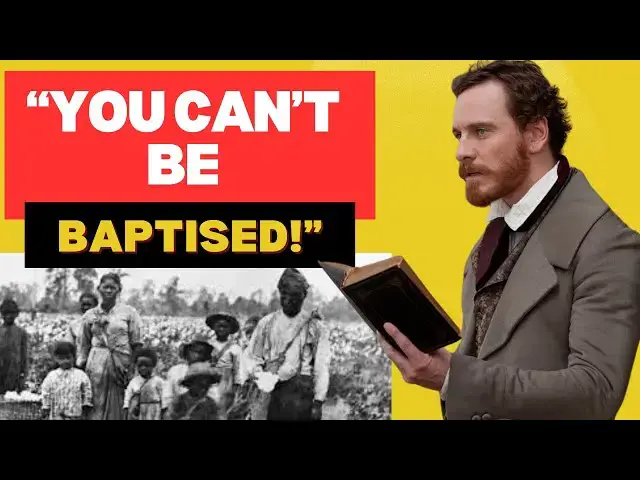
In the beginning, most slave owners refused to baptize their slaves. But why?
Stamped from the Beginning: https://amzn.to/3DRDIgZ
Subscribe to our channel so you don't miss any future videos!
Check out the books we love and recommend in our
Black Excellence Book Club:
https://www.blackexcellence.com/store/
Some links are affiliate links, which means we earn a very tiny commission if you make a purchase.
__________________________________________________________
Sharing interesting and noteworthy stories in Black culture.
All content provided by Black Excellence Media, LLC is for entertainment purposes only. None of the information or advice provided is to replace professional advice.
Website: https://blackexcellence.com
Show More Show Less View Video Transcript
0:00
Did you know many slave owners were
0:01
against baptizing their enslaved
0:03
workers? If you had to guess, what would
0:05
you say the reason is? Hi, my name is
0:07
Jared and welcome to Black Excellence.
0:08
We explore where and how black people
0:10
live in America with some nodes to
0:12
noteworthy moments in black history. And
0:14
I recently noticed that 80% of you that
0:17
watch our channel regularly are not
0:19
subscribe to our channel. Do me a favor
0:21
and hit that subscribe button. I mean,
0:23
come on, you watch us anyways, right? Go
0:25
ahead, click that little button.
0:28
In the early colonial period, European
0:30
settlers brought with them not only
0:32
their economic ambitions, but also their
0:34
religious beliefs. Christianity,
0:36
particularly in its Protestant and
0:38
Catholic forms, was a significant part
0:40
of European culture. However, the
0:42
application of these beliefs to enslave
0:44
Africans was fraught with contradictions
0:46
and anxieties. As you would expect,
0:49
Christianity has a long and complicated
0:51
history with slavery. Biblical texts
0:54
were often interpreted in ways that
0:56
justified the institution. Passages such
0:58
as those in Ephesians and Colossians,
1:00
which exhort slaves to obey their
1:02
earthly masters, were used to argue that
1:04
slavery was compatible with Christian
1:06
teachings. However, other passages such
1:09
as Galatians 3 28 speaks of the equality
1:13
in Christ and this created theological
1:15
tensions for slave owners who sought to
1:17
maintain their control. One of the
1:19
primary reasons slave owners were
1:21
reluctant to baptize their slaves was
1:23
the fear of legal implications. You have
1:26
to understand in the early stages of
1:28
American colonization, English common
1:30
law suggests that Christians could not
1:32
be enslaved. This belief originated from
1:34
medieval England where baptism was
1:37
associated with freedom and citizenship.
1:39
Slave owners feared that baptizing
1:41
slaves could lead to the legal
1:43
challenges regarding their status
1:45
potentially resulting in having to free
1:48
their slaves. The economic interest of
1:50
slave owners was of course massive.
1:52
Slavery was the cornerstone of the
1:54
colonial economy, particularly in the
1:57
southern colonies where cash crops like
1:59
tobacco, rice, and later cotton required
2:02
extensive labor. The prospect of losing
2:04
their labor force due to legal
2:06
challenges arising from baptism was a
2:09
significant deterrent. Maintaining the
2:11
enslaved population's legal status as
2:13
property was crucial to preserving their
2:15
economic model. Another reason slave
2:18
owners didn't want to baptize their
2:19
slaves was because they feared the
2:21
beliefs of Africans. Many slave owners
2:23
believed that African religions and
2:25
cultural practices were incompatible
2:28
with Christianity. Enslaved Africans
2:30
brought with them a rich tapestry of
2:32
ritual beliefs and practices which were
2:34
often misunderstood or viewed with
2:36
suspicion by European colonizers. Slave
2:39
owners feared that integrating these
2:40
individuals into Christian communities
2:43
might dilute or corrupt their own
2:45
religious practices. Baptizing slaves
2:47
also raised concerns about control and
2:49
domination. Slave owners worried that
2:51
introducing Christianity could lead to a
2:54
sense of empowerment among the enslaved
2:56
population. The Christian message of
2:58
spiritual equality and the inherent
3:00
value of every individual could
3:02
undermine the rigid hierarchal
3:04
structures that slavery depended on. So
3:07
here's a group of people with religious
3:08
beliefs of equality amongst people, but
3:11
then they also had slaves. And of
3:13
course, they didn't want to give up
3:14
their slaves. Religious beliefs be
3:16
damned. And it's sad cuz a lot of the
3:18
founding fathers knew they were probably
3:20
doing wrong. But the ends justified the
3:23
means, I guess. As the colonial period
3:25
progressed, legal frameworks evolved to
3:28
address these concerns. Colonial
3:30
lawmakers began to enact laws explicitly
3:32
stating that baptism would not alter the
3:34
enslaved status for Africans. For
3:36
example, all the way back in 1667, the
3:40
Virginia Assembly passed a law declaring
3:43
that baptism did not change the
3:45
condition of servitude. Similar laws
3:47
were enacted in other colonies,
3:49
providing slave owners with legal
3:50
reassurance that they could baptize
3:53
their slaves without risking having to
3:55
free them. Missionary societies also
3:58
played a crucial role in changing the
3:59
attitudes towards the baptism of slaves.
4:02
Organizations such as the Society for
4:05
the Propagation of the Gospel in foreign
4:07
parts or the SPG and individual
4:10
missionaries advocated for the religious
4:13
instruction and baptism of enslaved
4:15
Africans. They actually argued that
4:17
Christianizing slaves would make them
4:19
more obedient and improve moral
4:22
character, thus benefiting the
4:23
institution of slavery rather than
4:25
undermining it. So, if you're wondering
4:27
why would slave owners even care to
4:29
baptize their slaves, that's the answer
4:31
for you right there. There were actually
4:33
arguments for baptizing slaves so that
4:36
they become more obedient with better
4:38
moral character. Also, with slave
4:41
uprisings going on all over the place
4:43
all the time, I'm sure that this was one
4:46
of the answers that they might have come
4:48
up with that if you baptize them, it
4:50
might be a little bit easier to control
4:52
them. For many enslaved Africans,
4:53
baptism and conversion to Christianity
4:56
offered a form of spiritual liberation.
4:59
The Christian message of redemption,
5:01
hope, and eternal life provided comfort
5:03
and strength in the face of brutal
5:05
oppression. The church often became a
5:07
sanctuary and source of community for
5:09
enslaved individuals, fostering a sense
5:12
of solidarity and resistance. However,
5:14
the experience of baptism was marked by
5:16
ambiguity and contradictions. While
5:18
baptism offered spiritual benefits, it
5:21
did not change the harsh realities of
5:23
enslavement. Baptized slaves were still
5:25
subject to the same brutal conditions
5:27
and treatment as their non-baptized
5:29
counterparts. The promise of equality
5:32
before God stood in stark contrast to
5:34
the inequality they experienced in their
5:36
daily lives. Enslaved Africans found
5:39
ways to resist their condition and adapt
5:42
Christian practices to their own
5:44
cultural context. They incorporated
5:46
African traditions and beliefs into
5:49
their Christian worship, creating a
5:51
unique and vibrant expression of faith.
5:53
Spirituals, hymns, and religious rituals
5:56
often carried hidden messages of
5:58
resistance and hope, reflecting the
6:00
resilience and creativity of the
6:02
enslaved community. Black churches
6:03
provided a significant space for
6:05
community building and resistance. These
6:08
churches became centers of social and
6:10
political activity, playing a crucial
6:12
role in the fight for emancipation and
6:14
civil rights. The initial reluctance to
6:16
baptize slaves and the subsequent
6:18
adoption of Christian practices within
6:20
the enslaved community had long-term
6:22
consequences. The use of religion as a
6:25
tool of control continued even after the
6:28
abolition of slavery. Sharecropping,
6:30
segregation, and other forms of racial
6:32
oppression were often justified through
6:34
distorted interpretations of Christian
6:37
teachings. Despite these challenges, the
6:39
spiritual resistance of black
6:41
communities has endured. The legacy of
6:43
adapting and reshaping Christian
6:45
practices has contributed to the rich
6:47
tapestry of African-American religious
6:50
life. Black churches continue to be
6:52
vital centers of cultural, social, and
6:55
practical life, carrying forward the
6:57
legacy of resistance and hope. Again,
7:00
real quick, I just want to reference
7:01
this book where I learned a lot of these
7:04
subjects and so much more. It's called
7:07
Stamp from the Beginning. I share this
7:09
book all the time. It really talks about
7:11
how the initial Africans coming over
7:13
here in slave boats and how we got to
7:16
where we are today. I'll leave a link
7:17
below. Make sure you guys check out buy
7:20
this book. Try and read it. It's a long
7:22
read, but it's really good. I'll catch
7:24
you guys on the next one.