Up next in 10



If you like our videos, pitch into our Crowdfunding efforts to grow our operations! https://ifundwomen.com/projects/sharing-empowering-unique-black-stories
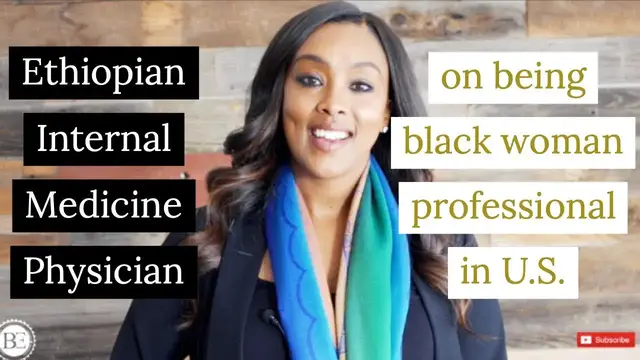
Being a black woman in any professional environment in the United States can have its challenges. But what about being the first black chief resident at UPMC internal medicine residency?
Filmmaker/Activist Malon Murphy chats with Etsemaye Agonafer about the peaks and valleys of being a black woman professional in this episode of Black Women Speak.
Black Women Speak is a series that encourages constructive and thought provoking conversations among black women.
Subscribe to our channel so you don't miss any future videos!
BlackExcellence.com is a digital platform dedicated to empowering excellence everyday through sharing noteworthy stories in the global black community.
Website: https://blackexcellence.com
Twitter: https://twitter.com/BExcelOnline
Instagram: https://www.instagram.com/blackexcell...
FB: https://www.facebook.com/BExcelOnline/
Show More Show Less View Video Transcript
0:00
Always know your why and let that serve as your compass in terms of whatever you want to do in the world
0:08
whether it's become a doctor, become the president in the United States, whatever it is
0:12
Knowing your why and letting that serve as your everything is all you need
0:24
What's up, bro? It's your girl, melanchine.com, and I am a millennia multi-hyphenate
0:30
filmmaker, writer, activist. And today we are here to talk about being a black woman professional
0:36
or just a person of color in the professional world, what it takes to get there, the trials
0:42
the tribulations, the peaks in the valleys, and knowing your why. We have a very special guest
0:47
Estima Agonifer, who is an internal medicine doctor, super accomplished, super black, super
0:53
excellent. Hi, I'm Estimaniaganafer, also known as it's Amai. I'm a first generation
0:58
Ethiopian American, a daughter, a sister, a friend. I'm also an internal medicine doctor
1:05
who's striving to make changes for vulnerable populations across Los Angeles in the United States
1:11
I was also the first black chief resident at UPMC internal medicine residency
1:17
So you've accomplished so much in your life and you're young and you're just kind of at the
1:22
beginning of your career. But I just want to talk about what it takes to get there. Do you feel like
1:28
that old adage that you have to be twice as good to get, you know, half as far
1:33
Is that something that you've experienced, that you've known to be true? You know, yes, I grew up as a first generation Ethiopian American
1:42
My parents came here, my dad at 15 and my mom in her late 20s
1:47
And by the time they met and had me in the mid-80s
1:52
disadvantages existed just as much, if not more, than they did now. So growing up as a kid, my dad always
1:58
always used to say you've got to be ten times better than the best. When you walk into a
2:03
room people are going to see first couple things first. You're black and you're a woman and you
2:10
don't look, you're not hard on the eyes and so you are going to be, you're going to be not taken
2:20
for what you are. People are always going to see you just for what's on the surface. So you have
2:24
to be ten times better than the best. My three tips for professional
2:28
black women are first know your why for everything that you do
2:34
So you're actually the valedictorian of your high school, right? So you've been an achiever for a long time
2:40
So do you feel like you had to fight against a lot of preconceived notions
2:45
Because I believe as black women, as black people are people of color in general, we have a lot of things
2:50
People make storylines for us right Sure sure Especially for a woman a black woman in the spaces that you are in accomplishing the things that you are doing You know you smart obviously Yeah
3:03
So how do you feel like people have kind of made a story for you or have you had to overcome the preconceived notions
3:09
To be honest, growing up here in Los Angeles, I didn't really feel that different
3:17
I always grew up around people that look different than me. I realized that I was a little bit different than most because of how hard I worked and I was able to accomplish a lot and that was rare for somebody that looked like me or came in the background like me, but didn't affect me until I left Los Angeles and went to Pittsburgh and got to experience a different sort of world that was less diverse
3:40
And really, really as a resident and a chief resident, I would walk into rooms and become really cognizant of the fact that I was being just
3:50
just seen as a black woman. While back home in L.A., I'd walk in a room
3:54
and I also grew up in a community where people knew me since I was a kid and I was a achiever
3:59
So I'd walk in a room back then, and people were like, oh, that's just estimate. But when I walked in a room back in Pittsburgh
4:05
I suddenly felt like I was so many things that I wasn't
4:10
People were just seeing me as a black woman as opposed to all of the layers that make up who I am
4:16
How did you feel minimized? What experiences did you have in the
4:20
position where you felt okay some other things are at play um so I have several
4:28
stories of where my skin color was took overpowered anything that you know I was
4:35
doing I can think of a story once where I was in the ICU and I was telling a
4:42
family about the the status of their their family member I walk in the room and this
4:49
little boy who was like four years old was sitting on his dad's shoulders and um he he said to me
4:58
excuse me why are you brown and i and i i was kind of taken aback like oh my goodness is this the
5:06
first time he's seen a brown person um and i told the little boy you know a lot of people like me
5:14
were born this way and he says oh and he's like and you're the doctor and i said
5:19
Yeah, I am. But then I, so after that encounter, talked to the family, let them know how their family member was doing, I walked out, and I really wanted to be around my colleagues and share that moment of, I wanted somebody to laugh it off with
5:35
And my colleagues who don't look like me, I went up and I told them what happened, and they all became really uncomfortable and sort of dismissed what I was saying and went back to their work
5:45
And I never felt more alone That just one example of how my color sort of left me feeling alone But there were many other times and it wasn where somebody was calling me out because of my skin and color
5:59
but more so that folks wanted me to speak on behalf of a whole race
6:03
Right, without realizing that, you know, my experience may be different from my colleagues or my patients or you name it
6:15
Or other black people. Right. Because we all have different stories. Right
6:19
Right. Second, be unapologetically yourself all of the time. And speak up when you feel least comfortable to speak
6:29
Sometimes as people of color, we get to somewhere that our parents never got or our grandparents never got these kind of uncharted lands
6:38
And there's nobody to advise you when you kind of just feel like you're floating. I know I personally feel in situations
6:45
Like, I don't know what I'm doing and how did I get in this room and I'm having a little bit of imposter syndrome
6:50
Right, right. And, you know, just feeling uncomfortable. For me, I experienced that coming from Watts
6:56
Even when I went to high school, I was in a very academic high school. And I just felt out of place
7:01
I was always smart type of my class and I'm with kids who their dad is a professor and their mom is a doctor
7:08
And so they're, you know, they're talking about things. It's way beyond what I was even interested in at the time
7:13
And I felt inadequate. And that was something that I used as a source of motivation, but I saw a lot of people around me kind of shrink in that feeling
7:23
A lot of people of color. So just talk about, can we talk about how going into uncharted lands feels and how you can feel alone as a person of color
7:33
Yeah. You know, breaking these ceilings and breaking these glass, but you don't know what you're doing
7:40
There's no roadmap. There's nobody to advise you. You look around and you, you know, see
7:44
anybody and you kind of got to trust your own intuition so how does that feel and
7:49
have you experienced that I think you say it so well I do there are many times
7:56
where I feel alone and I'd say all the time I'm just making this up as I go along but when I sit in those rooms with those people that are not like me I quickly
8:04
realize that the things that are coming out of my mouth are oftentimes the voice
8:09
of the folks that I came from those vulnerable people those disadvantaged folks
8:14
that don't even know that they're really disadvantaged or the world sees them that way
8:19
I'm always sort of taken aback by the fact that if I go back to my grandparents
8:25
and think about where they grew up and what they were able to do and where I am now
8:31
and how amazing it is to be in the position that I'm in
8:36
So, for instance, my grandmother, the only book she knew how to read was the Bible and that was through sort of rope memory Right To be able to be in a position where I could sit at the table and say whatever really is on my mind based off my lived experience is so empowering
8:54
Because she never even dreamed of it. Right. Right. That she would have kids that would then have kids that could do things that could really change the world in ways that we really never imagined
9:07
So sometimes I shrink in that. in that moment where, oh my gosh, everybody around me has so much more
9:15
and I don't know what I'm doing. I really don't know where this is taking me
9:19
But then I'm so empowered by where I came from and the possibilities
9:27
And really, all I do, I really do want to change the world in small ways and in big ways
9:34
So three tips for making it as a professional in this world
9:39
especially as a skin folk professional. I would say really care about the quality of your work
9:49
Anybody who is lucky enough to have a job or be working, you need to do quality work
9:55
So always put that first. Stay grounded in your why. So know why you're there, know your purpose
10:02
Because there's going to be office politics. There's going to be things that are going to happen
10:06
But you've got to stay grounded in yourself and your purpose. and your work. And be yourself. I know as a lot of times as black women or people of color
10:14
we feel like we have to be somebody else that we're performing, and that is exhausting
10:18
especially in a workplace. Be yourself, you're there for a reason. If you weren't there
10:22
something will be missed. You are valuable. You have valuable things to contribute. And be
10:27
yourself. People are curious. Anyway, everybody wants to peek into that blackness or that color
10:32
So, you know, use that to your advantage. Be professional, but be yourself. And know that that's enough
10:39
I always think of the quote, I am my ancestors' wildest dreams
10:43
When I feel like that, I remember how many people sacrificed and, you know, are so proud that I can be in the position that I'm in
10:53
And, you know, it would be kind of a disservice. Right. Not to go out and chart that land as uncharted and get a little further for the next person
11:01
Absolutely. So I can give somebody else something, right? Right. Right. But everybody doesn't have to feel like that either
11:06
It's okay to be, you know. So my sister is the complete opposite of me
11:11
And she's just like, estimate, why? Just relax and do your thing
11:15
Right. If you find that inner passion, that drive, then, yeah, dream it, do it
11:21
Right. But if you don't, that's okay, too. You don't have to, you know, be superwoman all of the time
11:28
That's also important to black women. Yeah, absolutely. For black women to understand it that she don't have to be super women all the time
11:34
Right
#Social Issues & Advocacy
#Discrimination & Identity Relations
#Human Rights & Liberties