Up next in 10



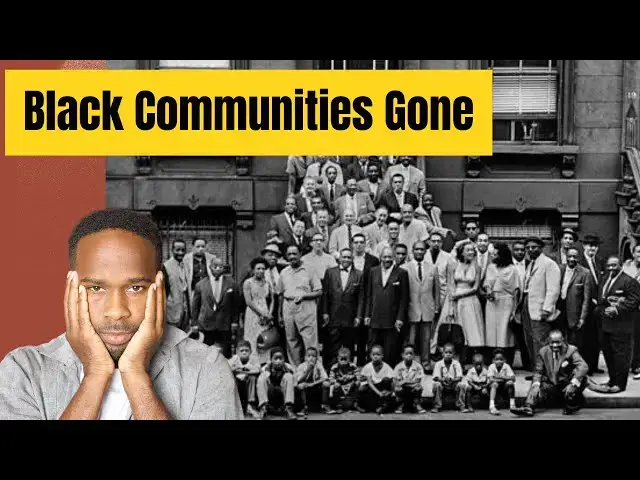
These historic Black neighborhoods were once a symbol of Black Excellence. But where are they now?
Why Reparations: https://youtu.be/vJFRXsCzO3Y?si=AOdxNnUFkVQgdUVI
Why Chicago is So Segregated: https://youtu.be/liQhU6xx_V0?si=TdzJtT14LsyVakcM
Subscribe to our channel so you don't miss any future videos!
Check out the books we love and recommend in our
Black Excellence Book Club:
https://www.blackexcellence.com/store/
Some links are affiliate links, which means we earn a very tiny commission if you make a purchase.
__________________________________________________________
Sharing interesting and noteworthy stories in Black culture.
All content provided by Black Excellence Media, LLC is for entertainment purposes only. None of the information or advice provided is to replace professional advice.
Website: https://blackexcellence.com
Show More Show Less View Video Transcript
0:00
For decades, historically black
0:02
neighborhoods in America served as
0:03
cultural, economic, and social
0:05
epicenters for black communities. From
0:08
the bustling streets of Harlem and New
0:10
York to the rich jazz heritage of New
0:12
Orleans TMA, these neighborhoods thrive
0:14
despite systematic challenges. But
0:16
today, many of these once vibrant
0:18
enclaves have been all but erased, or at
0:21
least their lights have been dimmed down
0:22
dramatically. But why, might you ask?
0:25
Well, let's talk about it. Hi, my name
0:26
is Jared and I talk about the who's,
0:29
why, and hows of black culture in
0:31
America because black culture is just so
0:33
interesting to me. So, if you find it as
0:35
interesting as I do, make sure you
0:37
subscribe and join me on fascinating
0:39
discussions every week. Today, we'll
0:41
look at four historical black
0:44
neighborhoods around the country. Let's
0:46
start out on the East Coast in Harlem.
0:48
Who hasn't heard about all the great
0:50
things that came out of Harlem? Harlem
0:52
emerged as the heart of the black
0:54
culture in the early 20th century,
0:56
particularly during the Harlem
0:58
Renaissance of the 1920s and 30s. This
1:01
era saw an explosion of black
1:03
literature, music, and intellectual
1:05
thought with figures like Langston
1:07
Hughes and Zoranil Hursten shaping
1:10
America's culture. Harlem's thriving
1:13
nightife attracted both black and white
1:15
patrons with jazz clubs like the Cotton
1:17
Club and the Apollo Theater hosting
1:19
legendary performers. However, after the
1:22
mid 20th century, Harlem faced economic
1:25
decline, crime, and devastation as
1:27
manufacturing jobs that sustained the
1:29
community all but washed up. By the
1:32
1970s and 80s, the neighborhood was
1:35
struggling with poverty, high crime
1:37
rates, and drug epidemics. I mean, who
1:39
doesn't remember movies like New Jack
1:41
City? Sit your $5 down before I make
1:44
change. Despite these challenges, Harlem
1:47
remained a stronghold of black culture
1:49
and activism. Today, Harlem is a mix of
1:51
historic black culture and rapid
1:53
gentrification. Between 2000 and 2020,
1:56
the black population of Central Harlem
1:58
decreased from 77% to about 54% while
2:02
the white population increased
2:04
significantly. Rising property values
2:06
and an influx of wealthier residents
2:08
have pushed out many longtime black
2:10
families. Efforts to preserve Harlem's
2:12
black identity, such as the protection
2:14
of the Apollo Theater and Harlem's
2:17
blackowned businesses, continue to be a
2:19
priority for activists and community
2:21
leaders. Greenwood in Tulsa, Oklahoma.
2:24
Greenwood, also known as the famous
2:27
Black Wall Street, was one of the most
2:29
prosperous black communities in America
2:32
in the early 1900s. By 1921, the
2:35
neighborhood boasted over 600 blackowned
2:38
businesses, including banks, hotels,
2:41
movie theaters, and newspapers. It was
2:43
and actually still is a symbol of black
2:46
self-sufficiency and economic power in a
2:49
deeply segregated America. However, this
2:52
prosperity was violently destroyed in
2:54
the Tulsa race massacre of 1921. White
2:57
mobs enraged by false accusations
2:59
against a black man looted and burned
3:02
Greenwood to the ground, killing an
3:04
estimated 300 black residents and
3:07
leaving thousands homeless. The
3:09
destruction wiped out decades of black
3:11
wealth in a matter of hours. In recent
3:13
years, Tulsa has made attempts to
3:15
acknowledge and rectify this dark
3:18
history. The Greenwood Rising History
3:20
Center was established to educate
3:22
visitors about the massacre and
3:24
reparations discussions continue. If you
3:26
want to see another video that we did on
3:28
reparations, I'll leave a link below.
3:30
Everyone else in this country has gotten
3:31
reparations in one way or another.
3:33
There's one group of people that were
3:35
left out. However, economic disparities
3:37
obviously remain. While the area has
3:40
seen redevelopment, much of the land
3:42
once owned by black families has been
3:44
taken over by new developments, and few
3:46
black businesses have been able to
3:48
reclaim their former prominence. The
3:50
median income for black residents in
3:52
Tulsa remains significantly lower than
3:55
that of white residents, highlighting
3:57
ongoing racial economic disparities.
3:59
Brownsville, Chicago. Brownsville was a
4:02
major hub for black migration from the
4:04
south during the early to mid 20th
4:07
century. As part of the great migration,
4:09
thousands of black Americans moved to
4:11
Chicago, seeking better economic
4:14
opportunities, and escape from Jim Crow
4:16
laws. Brownsville became a center of
4:18
black life, home to artists, musicians,
4:21
and activists. It was known for its rich
4:23
art scene, thriving businesses and
4:26
institutions such as the Chicago
4:28
Defender newspaper, which played a key
4:30
role in the civil rights movement.
4:32
Within decades, however, systematic
4:34
racism in housing policies and economic
4:37
discrimination led to struggles for the
4:39
neighborhood. The construction of public
4:41
housing projects such as the Robert
4:44
Taylor homes initially provided
4:46
affordable housing, but eventually
4:47
contributed to economic isolation and
4:50
crime due to underfunding and neglect.
4:53
If you haven't watched our video on why
4:54
Chicago is the most segregated big city
4:56
in America, do that after this video.
4:59
It's basically a deep dive into how
5:01
Chicago became the way it is now. Again,
5:03
by the 1970s and 80s, economic decline,
5:07
segregation, and disinvestment led to
5:09
hardships for the neighborhood. It seems
5:11
like America was really unhappy after
5:14
the civil rights movement. A lot of bad
5:16
things happened after the late60s. So,
5:19
into the 70s and 80s, it seems like they
5:21
went through black communities and tore
5:23
them apart even more. Let us know if you
5:25
think we should make maybe a short
5:26
documentary on that. Today, Brownsville
5:29
is experiencing a mix of revitalization
5:32
and gentrification. While efforts have
5:34
been made to promote black business
5:36
development and historic preservation,
5:38
rising real estate prices threatened to
5:40
displace longtime residents. The median
5:43
home price in Brownsville has increased
5:45
significantly, making it difficult for
5:47
some black families to remain in the
5:49
area. TMA, New Orleans. TMA is one of
5:52
the oldest black neighborhoods in
5:54
America and the birthplace of jazz. It
5:57
was a center of black resistance,
5:59
culture, and business. Home to free
6:01
black residents even during slavery with
6:04
institutions like the St. Augustine
6:06
Church and Congo Square serving as
6:08
spaces for black worship and cultural
6:10
expression. However, the construction of
6:13
the I 10 highway through the
6:15
neighborhood in the mid 20th century
6:17
devastated its economy, cutting the
6:20
community in half and leading to the
6:22
destruction of blackowned businesses.
6:24
Further damage came after Hurricane
6:26
Katrina in 2005 when many black
6:28
residents were displaced by
6:30
redevelopment efforts. Many homes were
6:32
left abandoned and posttorm policies
6:35
made it difficult for black residents to
6:37
return. Today, TMA remains culturally
6:39
significant with landmarks like Congo
6:42
Square and the Backstreet Cultural
6:44
Museum preserving its legacy. But
6:46
gentrification continues to alter its
6:48
demographic makeup. Before Katrina, TMA
6:50
was around 75% black. Today, the number
6:54
has dropped to around 53% as wealthier,
6:57
often white newcomers move into the
6:59
area. Property values have skyrocketed,
7:02
making it difficult for some longtime
7:04
residents to stay. While cultural
7:06
preservation efforts continue, the fight
7:08
against displacement remains a
7:10
challenge. The story of America's
7:12
historically black neighborhoods is one
7:14
of resilience and struggle. While many
7:16
have faced eraser, the legacy of these
7:19
communities lives on through their
7:20
impact on American culture, music,
7:23
business, and civil rights. Moving
7:25
forward, the challenge remains. How can
7:27
these historic spaces be preserved while
7:29
ensuring that the people who built them
7:31
are not forced out or forgotten? As
7:34
cities continue to evolve, it is
7:36
essential to protect black cultural
7:38
landmarks, support black home ownership,
7:41
and invest in policies that prevent
7:43
displacement. So, that's all I have for
7:45
you today. I hope you learned something
7:47
like I did. Don't forget to subscribe,
7:49
like, and share.
#People & Society
#Discrimination & Identity Relations
#Human Rights & Liberties
#Housing & Development